Endometriosis occurs when tissue similar to the lining of the uterus develops in other parts of the body. For some women, the condition is discovered only after they face difficulties Getting Pregnant. The good news: endometriosis does not mean you cannot get pregnant. Many women conceive naturally, some need surgery or IUI, and some need IVF.
What Is Endometriosis?
Endometriosis occurs when tissue similar to the womb lining grows outside the uterus, often on the ovaries, fallopian tubes or other areas of the pelvis. It responds to monthly hormones, bleeds, and irritates the area around it. Over time this causes inflammation and scar tissue. Doctors grade it from Stage I (minimal) to Stage IV (severe). The stage describes how widespread the disease is, not how bad your pain feels.
Common Symptoms
- Painful periods that may get worse with the passing years
- Ongoing pelvic or lower back pain
- Pain during intercourse
- Heavy or irregular bleeding
- Trouble getting pregnant
Some women have no symptoms at all. Mild pain is often brushed off as “normal period pain”, so diagnosis can take years.
How Endometriosis Affects Fertility
It can lessen fertility chances in more than one way:
- Tubes: Scarring can block or twist the fallopian tubes, so the egg and sperm cannot meet.
- Ovaries: Endometriotic cysts (endometriomas) can reduce the number of healthy eggs. Surgery on these cysts can also lower egg reserve, so the decision needs care.
- Egg quality and implantation: Inflammation in the pelvis may affect egg quality, and it can make it harder for an Embryo to settle in the womb lining.
Even so, many women with mild disease still conceive without treatment.
How Is Endometriosis Diagnosed?
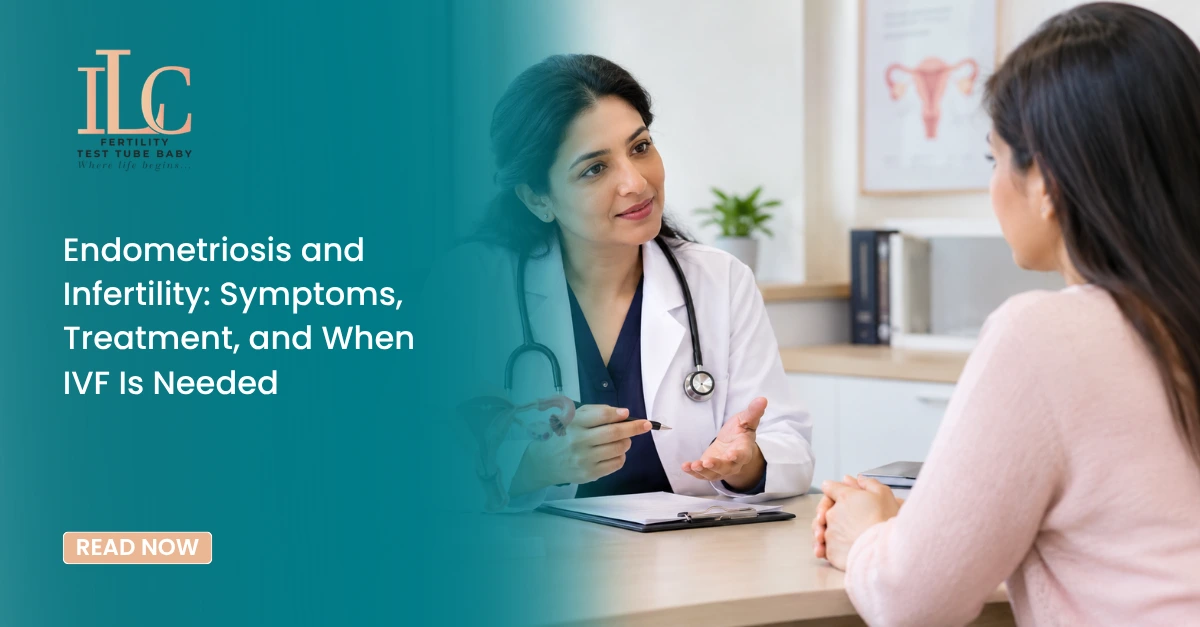
Doctors begin by reviewing your symptoms and medical history, followed by a pelvic exam. A transvaginal ultrasound may help identify cysts on the ovaries associated with endometriosis. An AMH blood test estimates your egg reserve, which matters a lot when planning fertility treatment. Laparoscopy, a keyhole procedure, confirms the disease and allows treatment in the same sitting. Not everyone needs it. Your doctor decides based on your symptoms and scan.
Treatment: Surgery, IUI, or IVF?
Medicines: These help with pain, not with getting pregnant. Hormonal contraceptives prevent pregnancy during use, so they help manage endometriosis symptoms rather than improve fertility directly.
Laparoscopic surgery: This works best when the disease is mild to moderate. Clearing out the endometriosis and scar tissue can give you a better chance of conceiving naturally.
IUI: This can work if the disease is mild, your tubes are open and your partner’s sperm count is normal. Doctors usually add ovulation medicines to improve the odds.
IVF/ICSI: Doctors usually suggest this for moderate to severe disease, for women aged 35 and above, when AMH is low, when the tubes are blocked, or when IUI has not worked. IVF skips the tubes completely, and the doctor can pick the healthiest embryos to transfer.
When to See a Specialist
Do not wait if:
- You have not conceived after one year of trying (6 months if you are over 35)
- Your periods are very painful or your pain is getting worse
- Your AMH is low
- A scan or test shows blocked tubes or an ovarian cyst
Frequently Ask Questions -:
Many women with mild to moderate endometriosis can get pregnant without medical intervention, although conception may take longer. Consulting a fertility specialist early can help you understand your options and plan the next steps.
No. Mild cases may need only surgery or IUI. IVF is advised when disease is severe, age is higher, AMH is low or other treatments fail.
Yes, it can return, as surgery removes visible disease but not the condition. Your doctor may suggest a plan to lower this risk, or to try for pregnancy soon after surgery.
Struggling to conceive with endometriosis? Book a consultation with Dr. Heena Agrawal at ILC Fertility, Indore.