
DNA Fragmentation Index (DFI) Test in Indore
What Is a DNA Fragmentation Index (DFI) Test?
DFI Full Form: DNA Fragmentation Index
DFI stands for DNA Fragmentation Index — a lab test (not a blood test) that measures the percentage of sperm with damaged or broken DNA strands. It is performed on a semen sample, not blood, and is also referred to as the sperm DNA fragmentation test.
Why Is the Sperm DFI Test Recommended for Fertility Evaluation?
The primary function of a sperm is to deliver male genetic material to the egg, and therefore the quality of the DNA delivered is of clear importance to the developing embryo and pregnancy success.
Standard semen analysis generally provides information about the sperm quality as a delivery vessel (i.e. motility, concentration, morphology) but does not directly assess what is being delivered, namely the DNA. One way of assessing the quality or “integrity” of sperm DNA is by measuring the fragmented sperm DNA (DNA breaks).
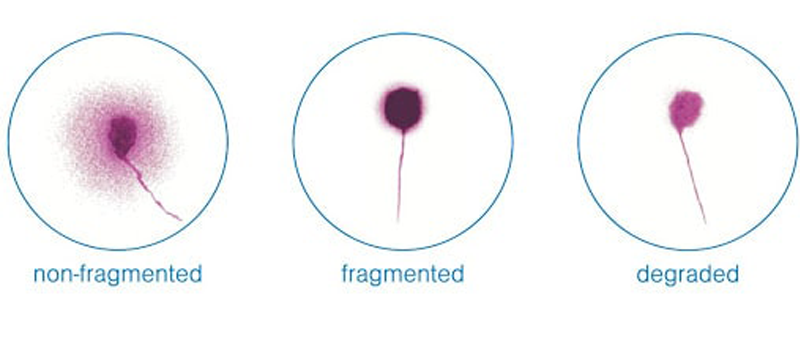
The DFI test or DNA Fragmentation Index test is performed at Indore Infertility Clinic to assess the number of DNA breaks and hence provides more insight to the sperm quality. This male sperm function test is typically done in andrology lab associated with IVF Clinics. At our ivf centre at Indore we perform Sperm DNA Fragmentation using Sperm Chromatin Dispersion technique which is precise in locating sperm with high DNA fragmentation index.
The DFI test at our IVF clinic takes 3 to 4 hours to perform.
How Is the DFI Test Performed?
The DFI test at our IVF Clinic In Indore uses the Sperm Chromatin Dispersion (SCD) technique. The process involves:
- Collecting a semen sample, similar to a routine semen analysis.
- Treating sperm cells with a solution that causes DNA to disperse into a “halo” pattern around intact sperm heads.
- Sperm with fragmented DNA show little or no halo, allowing technicians to identify and count them under a microscope.
- Calculating the DFI as a percentage — the proportion of sperm with fragmented DNA out of the total sample. The full process takes 3–4 hours, with results reviewed by our andrology team.
What Do DFI Test Results Mean?
DFI results are reported as a percentage of sperm with fragmented DNA:
- Below 15% – Good sperm DNA integrity, generally favorable for natural conception and IVF.
- 15–25% – Moderate fragmentation; pregnancy is still possible, though success rates may be somewhat lower.
- Above 25–30% – High fragmentation, often associated with reduced fertilization rates, poorer embryo quality, and higher miscarriage risk.
A high DFI doesn’t mean pregnancy isn’t possible, as it helps your fertility specialist decide whether additional steps, such as antioxidant therapy or advanced sperm selection during ICSI, could improve your chances.
Note for the team: the exact percentage cutoffs vary slightly by lab/technique.
Why DFI Matters for IVF Success
A high DFI can affect fertilization rates, embryo quality, and pregnancy outcomes — even when a standard semen analysis looks normal. For couples undergoing IVF or ICSI, especially after unexplained failed cycles or recurrent miscarriage, a DFI test helps identify sperm-related DNA damage that routine testing misses, allowing the fertility team to recommend targeted treatment such as antioxidant therapy, lifestyle changes, or advanced sperm selection techniques before the next cycle.
Frequently Ask Questions -:
DFI is a medical abbreviation for DNA Fragmentation Index, used specifically in male fertility and andrology testing.
Yes — "sperm DFI," "DFI test," and "DNA fragmentation index test" all refer to the same test measuring sperm DNA damage.
No — this is a common mishearing or typo of "DFI." The correct term is DFI (DNA Fragmentation Index).