Introduction
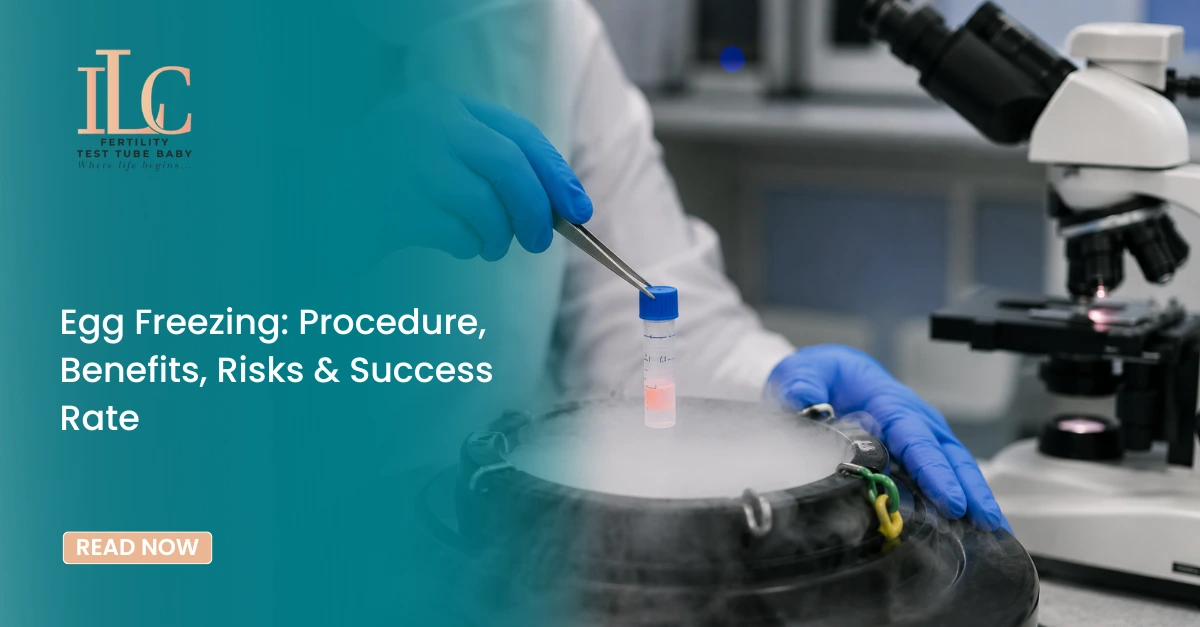
Egg Freezing is also known as Oocyte Cryopreservation. It is a modern fertility technique in which a woman’s eggs are collected and preserved at very low temperatures for future use. When needed, these frozen eggs can be thawed and used for pregnancy through IVF.
Why Is Egg Freezing Needed?
Women opt for egg freezing for various reasons:
Career and Education: To delay pregnancy due to career goals or higher studies
Medical Reasons: Before cancer treatments such as chemotherapy and radiation that may damage the eggs
Health Conditions: Conditions such as PCOS, endometriosis, or early menopause
Social Reasons: Waiting for the right life partner before planning a family
How Is the Procedure Done?
The entire process takes about 2 to 3 weeks:
Hormone Injections: For 10–12 days, hormone injections are given to stimulate the ovaries to produce multiple eggs.
Monitoring: Regular ultrasounds and blood tests are done to track follicle growth.
Egg Retrieval: Under mild anaesthesia, mature eggs are collected from the ovaries using a thin needle through the vaginal route.
Freezing: The collected eggs are frozen using a method called “Vitrification” and stored in liquid nitrogen at -196°C.
Advantages
Gives women the option to plan pregnancy later.
Preserves the possibility of using frozen eggs for future pregnancy, including after some cancer treatments.
Future pregnancy may be possible through IVF using frozen eggs.
Eggs can be stored safely for many years, depending on storage policies and applicable regulations.
Limitations and Precautions
Egg quality generally decreases with age, so earlier egg freezing may provide better chances than freezing at an older age.
Some eggs may be damaged during the freezing and thawing process.
There is no 100% guarantee of pregnancy.
The procedure can be expensive, and storage fees may apply depending on the fertility clinic and storage policy.
Conclusion
Egg Freezing gives women an option for preserving their reproductive potential. It is a major advancement in medical science that can help women plan around health, career, and family considerations. However, it is important to Consult A Fertility Specialist before making this decision.