For couples trying to conceive, timing is everything. Home ovulation kits and phone apps give you a rough idea, sure, but they can’t actually confirm that a healthy egg is maturing and being released. A follicular study — also called follicular monitoring or an ovulation study — is the most accurate way to track egg development in real time and pin down your exact fertile window.
Whether you’re trying naturally, going through IUI, or gearing up for an IVF cycle, knowing how a follicular study works can genuinely improve your odds.
What Is a Follicular Study?
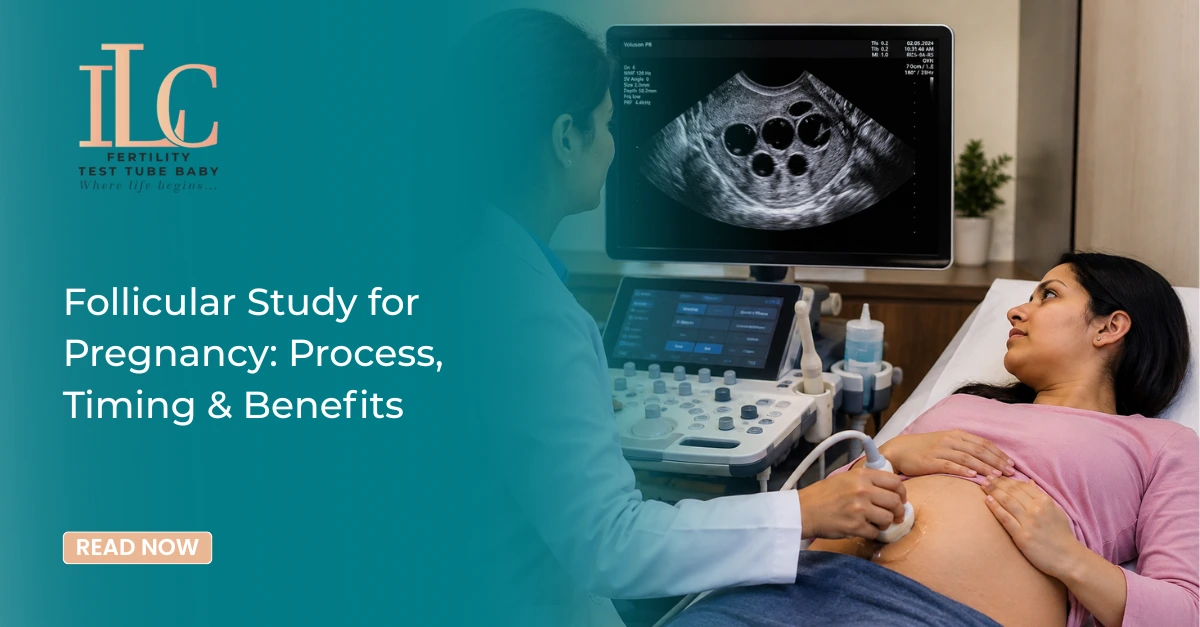
It’s a series of quick, non-invasive transvaginal ultrasound (TVS) scans done over several days of your menstrual cycle. This lets your fertility Specialist actually watch the follicles — the fluid-filled sacs in your ovaries that hold developing eggs — as they grow.
A basic urine test can only tell you a hormone surge happened. An ultrasound goes further and measures two things that really matter:
- Follicle Size & Growth Rate: whether the dominant follicle reaches a healthy, mature size — typically 18 mm to 24 mm.
- Endometrial Thickness: whether the uterine lining thickens enough (8 mm to 11 mm, with the classic “triple-line” pattern) to actually support implantation.
The Follicular Study Process: What to Expect
The procedure itself is quick, safe, and pretty much painless.
- Baseline Scan (Day 2–3 or Day 8–9): A first scan checks the starting condition of your ovaries and rules out any pre-existing cysts.
- Serial Tracking Scans: From there, scans repeat every 1–2 days to follow the follicle’s growth, which usually progresses at around 1.5 mm to 2 mm a day.
- Confirming Ovulation: Once the follicle hits peak maturity, later scans confirm the moment it ruptures and releases the egg — you’ll often see a bit of fluid left behind in the pouch of Douglas as evidence.
Timing: When Should You Get It Done?
Monitoring generally starts on Day 8 or so of your cycle (with Day 1 being the day you get your period) and goes until ovulation, which occurs between Days 12 and 16 in most cases.
The schedule specifically shifts in terms of whether you’re doing it through a natural cycle or one propped by fertility medication — your specialist will work that out for you.
Benefits of Follicular Monitoring: 4 key points
Eliminates Guesswork for Natural Conception: Contains a 24-hour window to time intercourse rather than praying you hit the dates right.
IUI & IVF Planning: Enables doctors to time the hCG trigger injections needed for insemination or egg retrieval with pinpoint precision.
Identifies Ovulatory Disorders Early: May indicate problems such as an unruptured follicle (LUFS), a thin lining, or abnormal growth patterns associated with polycystic ovary syndrome (PCOS) — all of which might otherwise go unnoticed.
Minimizes the Potential for Overstimulation: Allows medication dosages to stay within a safe range and reduces the risk of Ovarian Hyperstimulation Syndrome (OHSS) during fertility treatment.
Expert Follicular Tracking in Indore at ILC Fertility
Dr. Heena Agrawal, Gold Medallist and Infertility & IVF Specialist, masterminds follicular monitoring at ILC Fertility & IVF Center. Backed by high-resolution TVS technology and fast reporting, couples get guidance that’s tailored to them at every stage — not a one-size-fits-all protocol.