
Introduction
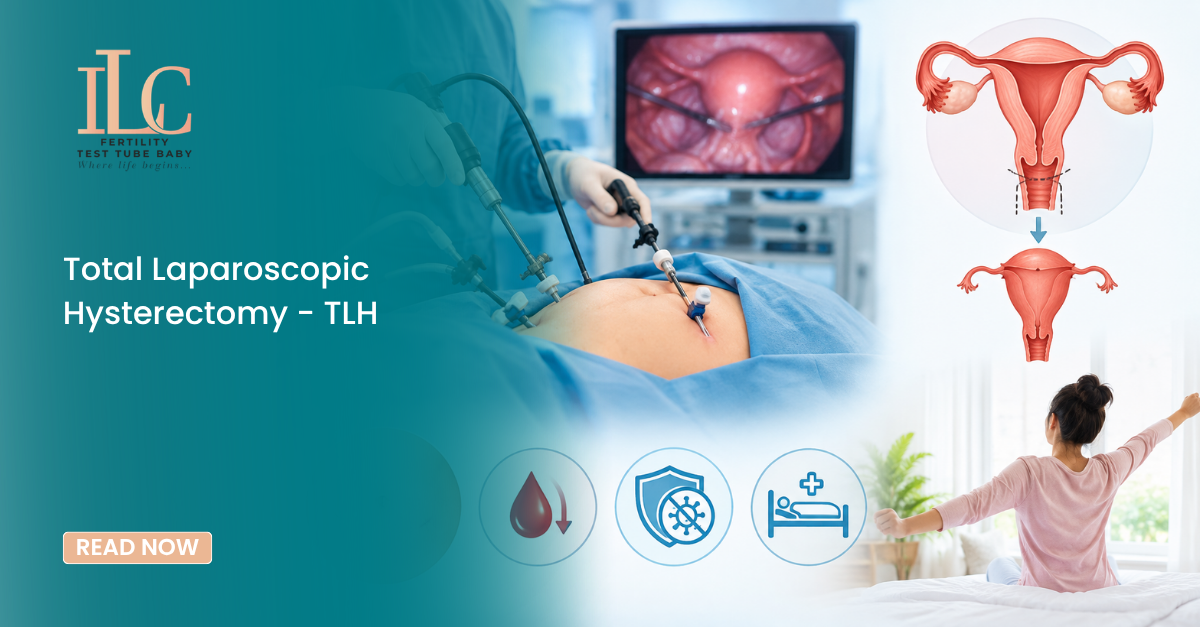
TLH stands for Total Laparoscopic Hysterectomy. It is a modern surgical procedure in which the entire uterus is removed with the help of a laparoscope. In this method, instead of a large incision on the abdomen, only 3 to 4 small cuts are made.
Why Is TLH Needed?
TLH is recommended in the following conditions:
Presence of large fibroids or tumors in the uterus
Heavy and prolonged menstrual bleeding not controlled by medicines
Endometriosis and severe pelvic pain
Uterine prolapse
Early-stage cancer of the uterus or cervix
TLH Procedure
The surgery is performed under general anaesthesia. Three to four small incisions are made near the navel and on the lower abdomen. A laparoscope with a camera is inserted through one incision, and surgical instruments are inserted through the others. With the help of the camera, the doctor separates the uterus from its supporting ligaments and blood vessels. Then, the entire uterus is removed through the Vaginal Route. The top of the vagina is stitched to close it. The entire procedure takes about 1.5 to 2.5 hours.
Advantages of TLH
TLH has many benefits. There is less blood loss, a lower risk of infection, and very small scars. The patient experiences less pain and can be discharged from the hospital within 1–2 days. She can return to normal daily activities in 3 to 4 weeks.
Limitations and Precautions
After this surgery, menstruation stops permanently, and pregnancy is no longer possible. The patient should avoid heavy lifting for 6 weeks after surgery. Risks such as infection, bleeding, or injury to nearby organs are very rare.
Conclusion
TLH is a safe and effective method for treating uterine diseases. Due to less discomfort and faster recovery, it is widely preferred today. However, before deciding on surgery, the patient should Consult A Doctor.